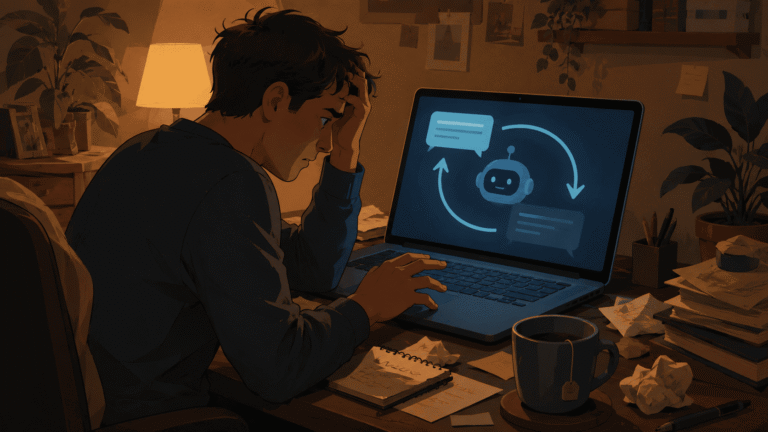
Your Customers Are Asking ChatGPT, Not Google — The New D2C Discovery Playbook
The shift, in one sentence For 20 years, shopping online started the same way: open Google, type "best face serum for oily skin," click some links. Now, millions…

The shift, in one sentence
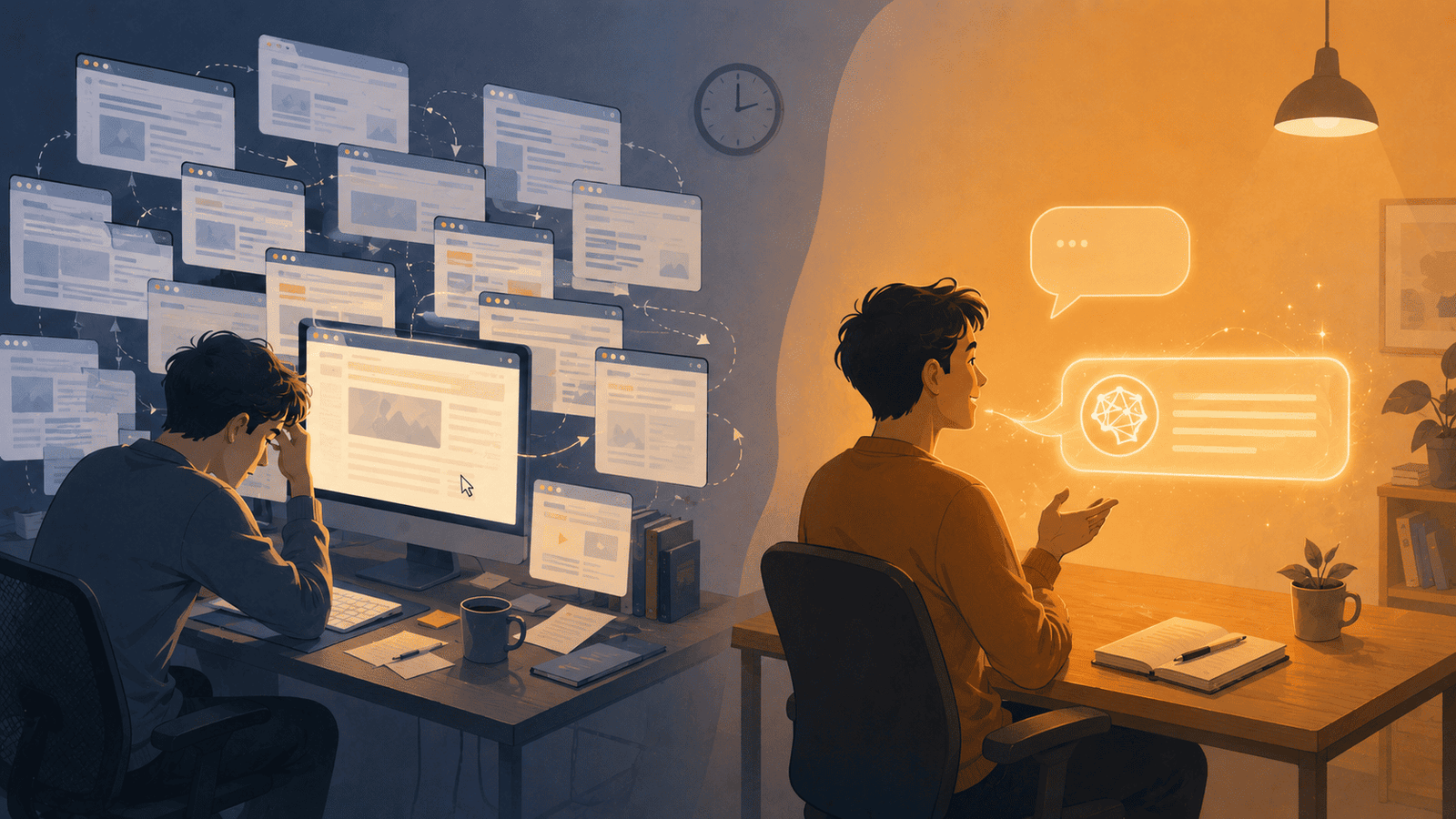
For 20 years, shopping online started the same way: open Google, type “best face serum for oily skin,” click some links. Now, millions of people skip all of that. They simply ask an AI — ChatGPT, Perplexity, or Gemini — “Which face serum should I buy for oily skin?” and the AI gives them an answer, often with specific brand names.
If the AI mentions your brand, you win a customer without paying for a single ad click. If it doesn’t, you are invisible — and you won’t even know it. This is the biggest change in how customers discover brands since social media, and most D2C brands are not ready for it.
The numbers: small today, exploding fast
Let’s be honest with the data, because it tells two stories at once.
Story 1: It’s growing at crazy speed.
- Traffic from AI tools to US retail websites grew about 4,700% year over year, according to Adobe’s research. (Ringly, 2026)
- ChatGPT alone reached around 900 million weekly users by early 2026 — that is real, mainstream reach, not a niche toy. (Elogic, 2026)
Story 2: It’s still small — but the visitors are gold.
- Today, AI sends far fewer visitors than Google does. One academic study found ChatGPT made up less than 0.2% of ecommerce traffic in 2025. So no, AI traffic will not replace your other channels tomorrow. (Practical Ecommerce, 2026)
- But the visitors who do come from AI are far more serious buyers. Adobe found AI-referred visitors were 42% more likely to purchase and generated 37% more revenue per visit than visitors from other channels. (Practical Ecommerce, 2026)
- A separate study of 94 ecommerce brands found ChatGPT visitors converted at 1.81% vs 1.39% for normal organic search — about 31% better. (ALM Corp, 2026)
Think of it like this: AI search is a small door right now, but the people walking through it have their wallets out.
A hidden problem: you can’t see this traffic properly
Here is something most founders don’t know. Analysis suggests roughly 70% of AI-referred visits get wrongly labelled as “direct” traffic in standard analytics setups, meaning AI traffic may be undercounted by 3 to 4 times. (Elogic, 2026)
So your dashboard may be telling you “AI sends us nothing” while AI is quietly sending you some of your best customers.
How to get your brand recommended by AI — 5 simple steps
The good news: getting visible in AI answers is mostly about doing the basics well. This new skill is often called AEO (Answer Engine Optimisation) — like SEO, but for AI answers.
- Let the AI bots in. AI tools use “crawlers” (robots that read websites). Check your website’s
robots.txtfile and make sure AI search crawlers like OpenAI’s OAI-SearchBot are allowed. If you block them, you cannot appear in their answers — no matter how good your product is. (Prime Avenue Group, 2026) - Fix your product data. AI reads structured data (called “schema” or JSON-LD) on your product pages — price, stock, reviews, ingredients, sizes. Complete, accurate product data is what AI uses to recommend you. Interestingly, research suggests most of ChatGPT’s shopping data comes straight from Google Shopping feeds — so a clean, complete shopping feed now powers your AI visibility too. (Prime Avenue Group, 2026)
- Write content that answers real questions. AI loves clear, honest, specific answers: “Which sunscreen is best for oily skin in humid weather?” Write blog posts and product pages that answer the exact questions your customers ask. Comparisons, FAQs, and honest pros-and-cons get picked up.
- Build mentions beyond your own website. AI tools learn about brands from reviews, press, Reddit discussions, and trusted lists. Getting your brand mentioned in credible places teaches the AI that you exist and that people like you.
- Start tracking AI traffic now. Set up tracking so visits from ChatGPT, Perplexity, and Gemini are labelled properly in your analytics. Even if the numbers are small today, you’ll learn early what these high-intent buyers want — before your competitors do.
The bottom line
Google isn’t dead — it still sends most of the traffic. But a new front door to your brand has opened, and the shoppers using it convert better than almost anyone else. The brands that prepare now — open bot access, clean product data, question-answering content — will be the names AI recommends by default. The ones that wait will wonder where their traffic went.
The best time to start was last year. The second-best time is this week.
Sources
- Adobe Digital Insights, Quarterly AI Traffic Report, via Practical Ecommerce (April 2026)
- ALM Corp, ChatGPT Traffic Converts 31% Higher Than Non-Branded Organic Search (February 2026)
- Elogic Commerce, ChatGPT Commerce & Agentic Shopping Statistics 2026 (May 2026)
- Ringly, 52 Generative AI Ecommerce Statistics (April 2026)
- Prime Avenue Group, ChatGPT Shopping Optimization for E-commerce in 2026 (April 2026)
- Kaiser & Schulze, ChatGPT Referrals to E-Commerce Websites (SSRN, 2025), via Practical Ecommerce
Want us to audit your creative engine?
We'll map your concept-to-spend ratio and show you exactly where scaling breaks.
Book a free teardown →