Brand vs. Performance Is a Fake Fight — Why the Best D2C Brands Do Both
Two kinds of marketing, explained simply Imagine two different people working for your brand. The first person stands in a busy market and shouts, "Buy now! 20% off!…

Two kinds of marketing, explained simply
Imagine two different people working for your brand.
The first person stands in a busy market and shouts, “Buy now! 20% off! Click here!” They want a sale today. This is called performance marketing — ads that ask people to buy right away, where you can count every click and every sale.
The second person does not ask for a sale at all. Instead, they slowly make your brand famous and liked, so that when people need your kind of product, they already think of you. This is called brand marketing — building trust and memory over time.
Many D2C founders argue about which one is better. The honest answer, backed by decades of data, is that this is the wrong question. You need both. And the surprising part is: they actually make each other stronger.
Quick note: “D2C” means direct-to-consumer — a brand that sells its own products straight to shoppers.
What the research actually found
Two researchers, Les Binet and Peter Field, studied this question very carefully. They looked at 996 real advertising case studies, covering about 700 brands across 83 industries, over more than 30 years of data. This is one of the biggest studies of its kind. (Lead-Gen Economy, 2026)
Their famous finding became known as the “60/40 rule”: for steady, long-term growth, brands did best when they spent about 60% on brand building and 40% on performance (quick-sale) ads. (Marketing Week, 2024)
But here is the twist. In recent years, brands did the opposite. According to WARC data, by 2024 about 69% of marketing budgets went to short-term performance ads, and only about 31% went to brand building — almost the reverse of what the research recommends. (Lead-Gen Economy, 2026)
Why did this happen? Because performance ads are easy to measure. You can see the clicks. Brand building is harder to measure, so it often gets cut first. But cutting it has a cost.
Why doing both works better
This is the most important idea, so let’s keep it simple: brand building makes your performance ads cheaper.
When people already know and trust your name, they are far more likely to click and buy when they see your “buy now” ad. When they have never heard of you, they hesitate.
The numbers back this up:
- One analysis found that moving from performance-only to brand + performance gave around a +90% boost in return. Going the other way (cutting brand) caused about a 40% drop. (Lead-Gen Economy, 2026)
- Well-known brands enjoy a 30–50% lower cost to get a new customer (CAC) and conversion rates around 2.5 times higher than unknown brands. (Deep Marketing, 2026)
A 2026 D2C report summed it up nicely: brand makes your performance cheaper, and performance data makes your brand smarter. They feed each other. (Sprints & Sneakers, 2026)
Think of it like fishing. Performance marketing is catching fish from a lake. Brand building is restocking the lake. If you only catch and never restock, one day the fish run out — and that is exactly what happens when ad costs slowly climb and your sales stall.
A fair word of caution
Not every expert agrees on the exact “60/40” number, and it is worth knowing why.
Professor Byron Sharp, a respected marketing scientist, has pushed back on the precise 60/40 split. He agrees brands need both jobs, but he argues the focus should be on building strong memories of your brand and being easy to find and buy, and advertising steadily all year — rather than chasing one fixed ratio. (Ehrenberg-Bass Institute, 2025)
Even Binet and Field say 60/40 is a starting point, not a hard law. The right mix changes with your situation. A brand-new challenger that nobody has heard of may need to spend more on brand at first. A large, famous brand can flex the other way. (System1 Group, 2024)
So the lesson is not “always spend exactly 60/40.” The lesson is: don’t put nearly 100% into performance. That is the real mistake most D2C brands are making.
What to do — in plain steps
- Stop spending everything on “buy now” ads. If almost all your budget is performance, you are slowly making your own ads more expensive.
- Carve out a real slice for brand. Even a smaller starting amount for brand work (your story, your look, your point of view) will start lowering your customer cost over time.
- Measure both the short and the long. Track today’s sales, yes — but also track things like how many people search for your brand by name. That is a sign your brand is growing.
- Adjust to your stage. New brand? Lean a bit more into brand building. Established? You have more room to push performance.
The bottom line
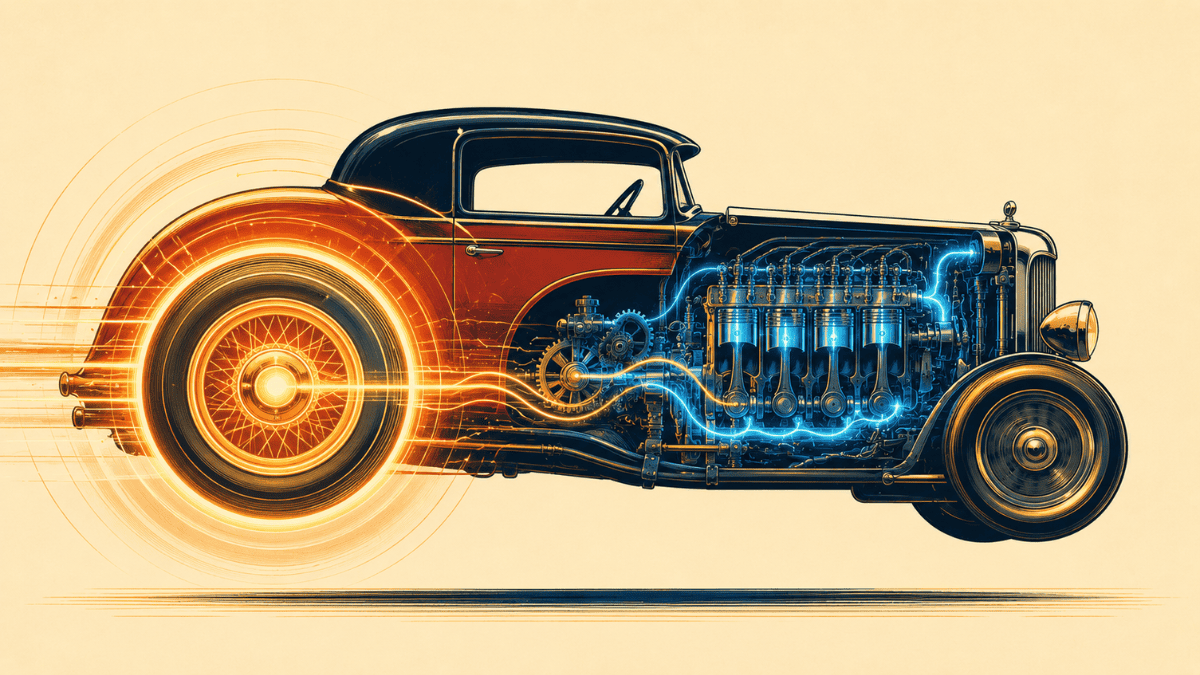
Brand vs. performance is a fake fight. It is like arguing whether a car needs an engine or wheels — it needs both to go anywhere.
Performance brings the sales you can see today. Brand makes those sales cheaper and steadier tomorrow. The D2C brands that grow profitably in 2026 are the ones that stopped picking sides and started using both together.
Sources
- Les Binet & Peter Field, The Long and the Short of It (IPA, 2013) — summarized via Marketing Week (2024) and Lead-Gen Economy (2026)
- Deep Marketing, 60/40 Rule 2026: Brand vs Performance Budget Split (April 2026)
- WARC, Multiplier Effect data (2024), via Lead-Gen Economy (2026)
- Sprints & Sneakers, D2C & E-commerce Growth 2026 (2026)
- Ehrenberg-Bass Institute / Byron Sharp commentary (November 2025)
- System1 Group, The Long & Short of It (2024)
Want us to audit your creative engine?
We'll map your concept-to-spend ratio and show you exactly where scaling breaks.
Book a free teardown →