Everyone’s Using the Same AI Creative — Here’s How to Escape the Sea of Sameness
The problem in one picture Think about an art class where every student is given the same template to draw. At the end, all the drawings look almost…

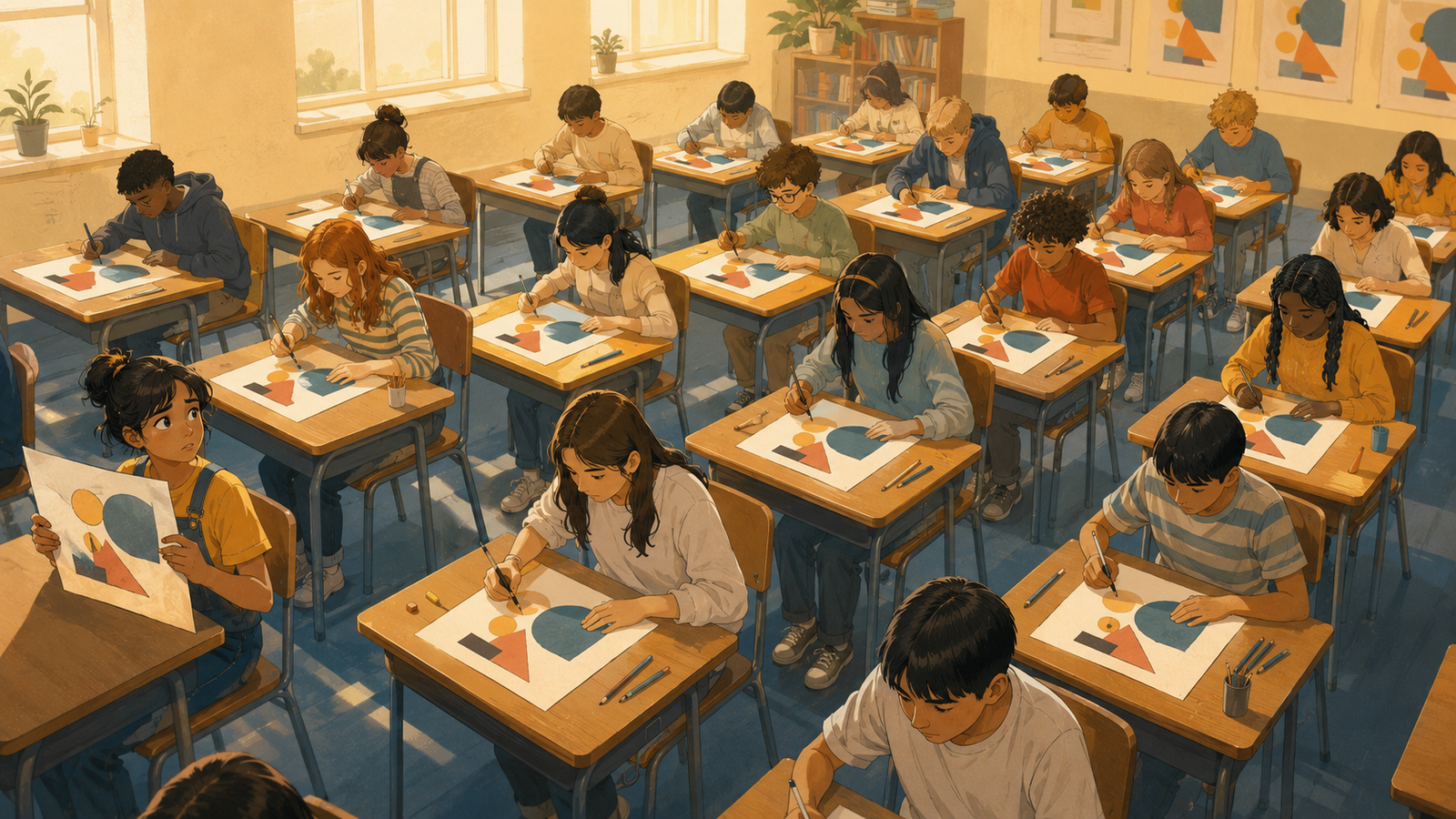
The problem in one picture
Think about an art class where every student is given the same template to draw. At the end, all the drawings look almost the same. Nobody’s stands out.
That is exactly what is happening with ads right now. AI tools have made it super cheap and fast to create ads. But because most brands use the same few AI tools in the same way, a lot of ads have started to look and sound alike. Marketers now call this the “sea of sameness.”
If your ad looks like everyone else’s ad, people scroll past it. It becomes like wallpaper — there, but nobody notices it.
Why this is happening
Here is the simple reason: AI does not really create new things. It looks at millions of old ads, logos, and photos, learns the common patterns, and then mixes them into something that looks like what worked before. The result is usually neat and “good enough” — but average. And average looks like everyone else.
A few numbers show how fast this is growing:
- Brands now use AI mostly to save money. In a 2026 study by the IAB (a big advertising research group), cutting costs became the number one reason brands use AI, picked by 64% of them — up from fifth place in 2024. Meanwhile, “creative innovation” slipped a little. (IAB, 2026)
- Customers can tell. In the same study, 71% of young shoppers (Gen Z and Millennials) said they think they have seen an AI-made ad — up from 54% just two years earlier. And they felt less positive about these ads than brand bosses assumed. (IAB, 2026)
So while brands rush to make cheaper ads, customers are getting tired of seeing the same kind of stuff.
The real danger: creative fatigue
“Creative fatigue” is a simple idea: people get bored of an ad after seeing it too many times, so it stops working. The scary part is that this is happening faster than ever.
One 2026 industry report points out that ads used to stay fresh for months. Now, when feeds are full of look-alike ads, a creative can go stale in weeks, sometimes even days. (Brillity Digital, 2026)
Advertising magazine ADWEEK put it sharply: when making content becomes almost free, “good enough” creative loses its value. What becomes rare and valuable is taste, direction, and the courage to make something that does not look like it came out of the same machine as everyone else. (ADWEEK, 2026)
The good news: AI is not the enemy
Here is the part most people get wrong. AI is not making creativity dead. AI is a multiplier — it makes whatever you already have bigger.
As one 2026 branding report neatly summed up, AI speeds up strong brands and exposes weak ones. (Rising Above the Noise, 2026)
In plain words:
- If your brand has a clear voice and a strong idea, AI helps you spread that idea everywhere, fast.
- If your brand is vague and copies others, AI will just make a thousand boring copies of that vagueness.
So the fix is not to stop using AI. The fix is to give AI something strong to work with.
How to escape the sameness — 5 simple moves
- Decide what makes you different first. Before you touch any AI tool, write down your brand’s point of view, its voice, and what it stands against. AI cannot invent this for you. It can only stretch what you already have.
- Use AI for the boring 80%, keep the spark human. Let AI make the many small versions (different sizes, headlines, formats). But the core idea, the joke, the hook — that should come from a human with taste.
- Be specific and a little bold. Generic ads feel safe but disappear. A sharp, honest, slightly unusual ad gets remembered. “Safe” is now the riskiest choice.
- Refresh faster. Since ads tire out in days now, plan for a steady stream of new creative instead of running one ad forever.
- Be honest about using AI. The IAB study found that telling people when AI was used can actually make them more willing to buy. Hiding it can backfire. (IAB, 2026)
The bottom line
AI gave every brand the same paintbrush. That means a beautiful brush is no longer special — what you choose to paint is. The brands that win in 2026 will not be the ones that make the most ads. They will be the ones brave enough to look different.
Use AI for speed. Use humans for soul. That mix is your real edge.
Sources
- IAB, The AI Ad Gap Widens (January 2026) — iab.com/insights/the-ai-gap-widens
- ADWEEK, 10 AI Marketing Trends for 2026 (February 2026) — adweek.com
- Brillity Digital, Marketing in 2026: Creative Fatigue Is the Real Problem (March 2026) — brillitydigital.com/blog/creative-fatigue
- Rising Above the Noise, Why AI Is the Best Thing for Strong Brands (2026) — risingabovethenoise.com/brand-differentiation-ai-era
- Wrighty Media, Driving Differentiation in the AI Age — wrightymedia.com
Want us to audit your creative engine?
We'll map your concept-to-spend ratio and show you exactly where scaling breaks.
Book a free teardown →